
Exploring Precision Stainless Steel Casting

Precision stainless steel casting offers unmatched opportunities for businesses requiring custom metal parts. It delivers complex shapes, tight tolerances, and excellent surface finishes. This process suits industries demanding durability and corrosion resistance. I explore key aspects of this method, focusing on practical insights and actionable advice.
Understanding Precision Stainless Steel Casting
Precision stainless steel casting uses a wax pattern to create a ceramic mold. The wax melts away, leaving a cavity for molten stainless steel. This method produces parts with intricate details and minimal machining. It suits components with thin walls and complex geometries.
Advantages include:
High dimensional accuracy
Smooth surface finish
Ability to cast complex shapes
Reduced material waste
Common stainless steel grades used are 304, 316, and 410. Each offers different corrosion resistance and mechanical properties. Choose the grade based on the application environment and mechanical requirements.
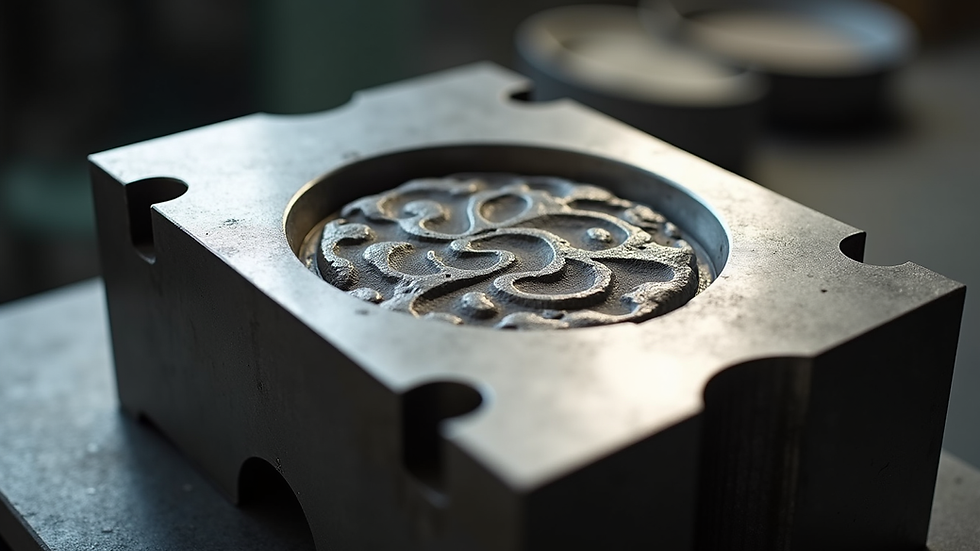
Benefits of Precision Stainless Steel Casting for Businesses
Precision stainless steel casting reduces lead times and lowers production costs. It eliminates the need for extensive machining. This saves time and money, especially for complex parts.
Key benefits:
Repeatable quality for large production runs
Flexibility in design changes
Reduced tooling costs compared to traditional methods
Excellent mechanical properties and corrosion resistance
This process supports rapid prototyping and small batch production. It also scales efficiently for mass production. Businesses gain competitive advantage by delivering high-quality parts faster.
Materials and Process Control
Material selection impacts final product performance. Stainless steel alloys vary in carbon content, chromium, nickel, and molybdenum. These elements influence hardness, toughness, and corrosion resistance.
Process control is critical. Maintain precise temperature control during melting and pouring. Control cooling rates to avoid defects like porosity and cracking. Use advanced simulation software to predict casting behavior.
Steps to ensure quality:
Select appropriate stainless steel grade
Design wax patterns with draft angles and fillets
Use high-quality ceramic shell materials
Monitor melting and pouring temperatures
Inspect castings with non-destructive testing

Applications of Precision Stainless Steel Casting
This casting method suits various industries. It produces parts for aerospace, automotive, medical, and food processing sectors. Components include valves, pumps, turbine blades, surgical instruments, and food-grade equipment.
Examples:
Aerospace: turbine blades requiring heat resistance and strength
Automotive: exhaust components and engine parts
Medical: surgical tools needing corrosion resistance and precision
Food processing: sanitary fittings and valves
The ability to cast complex shapes with tight tolerances makes it ideal for critical applications. It supports innovation by enabling designs that are difficult to machine.
Choosing a Reliable Casting Partner
Selecting the right partner is crucial. Look for expertise in stainless steel alloys and precision casting techniques. Verify quality certifications and production capabilities. Ensure the partner offers comprehensive services from design support to finishing.
Consider these factors:
Experience with custom metal casting and machining
Capacity to handle small and large orders
Competitive pricing without compromising quality
Proximity to reduce lead times and shipping costs
A reliable partner helps optimise design for manufacturability. They provide technical advice to improve casting yield and reduce defects. This collaboration enhances product quality and delivery reliability.
Enhancing Production Efficiency
Optimise production by integrating design and process improvements. Use computer-aided design (CAD) and simulation tools early. This reduces trial and error during manufacturing.
Implement lean manufacturing principles:
Minimise waste in materials and time
Standardise processes for consistency
Train staff on quality control and safety
Regular maintenance of equipment prevents downtime. Invest in automation where feasible to increase throughput. Track key performance indicators to identify bottlenecks and improve continuously.
Future Trends in Stainless Steel Casting
Advances in materials and technology drive innovation. New stainless steel alloys offer improved strength and corrosion resistance. Additive manufacturing complements casting by enabling hybrid processes.
Digitalisation enhances process monitoring and quality control. Real-time data analytics predict defects and optimise parameters. Sustainable practices focus on reducing energy consumption and recycling materials.
Businesses adopting these trends gain a competitive edge. They deliver superior products while reducing environmental impact.
Final Thoughts on Precision Stainless Steel Casting
Precision stainless steel casting transforms complex designs into durable, high-quality parts. It balances cost, speed, and performance. Businesses benefit from its flexibility and reliability.
Invest in a knowledgeable partner. Focus on material selection, process control, and continuous improvement. Embrace new technologies to stay ahead.
Explore how stainless steel casting can elevate your manufacturing capabilities. Precision and quality start here.


Comments