
Exploring the Versatility of Custom Cast Iron Components

Custom cast iron components offer unmatched strength and adaptability. They serve industries requiring precision and durability. I focus on their applications, benefits, and manufacturing insights. This post guides businesses seeking reliable metal casting and machining solutions.
Advantages of Custom Cast Iron Components
Custom cast iron components excel in toughness and wear resistance. They withstand harsh environments and heavy loads. Their thermal conductivity suits engine parts and machinery bases. Benefits include:
High durability: Resists deformation and fatigue.
Cost efficiency: Lower production costs for complex shapes.
Versatility: Suitable for various industries.
Machinability: Easy to finish and modify post-casting.
Examples show custom cast iron components in automotive, construction, and manufacturing sectors. Engine blocks, pump housings, and machine frames often use cast iron for longevity and performance.
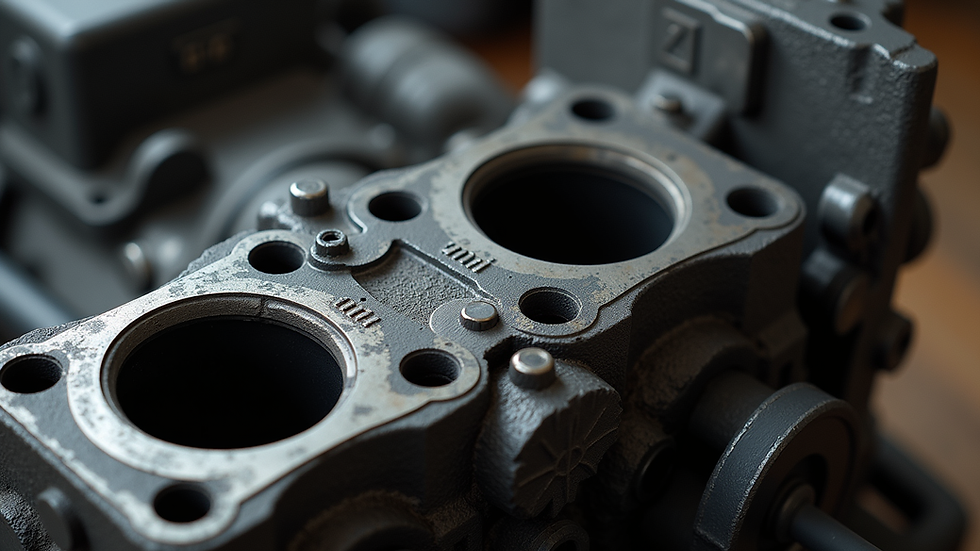
Manufacturing Process of Custom Cast Iron Components
The process starts with pattern making. Patterns replicate the final product shape. Next, moulds form around the pattern using sand or metal. Molten iron pours into the mould cavity. After cooling, the casting is removed and cleaned.
Key steps:
Pattern design: Ensures dimensional accuracy.
Mould preparation: Sand or metal moulds used.
Melting and pouring: Iron heated to 1200-1500°C.
Cooling and solidification: Controlled to avoid defects.
Finishing: Machining and inspection for quality.
This process allows for complex geometries and tight tolerances. It supports both small batch and mass production.
Applications of Bespoke Cast Iron Parts
Bespoke cast iron parts adapt to specific needs. They fit unique designs and operational demands. Industries benefit from tailored solutions that standard parts cannot provide.
Applications include:
Agricultural machinery: Custom gears and housings.
Mining equipment: Durable wear-resistant components.
Marine industry: Corrosion-resistant engine parts.
Construction: Heavy-duty brackets and supports.
Using bespoke cast iron parts improves equipment lifespan and reduces downtime. Customisation ensures compatibility with existing systems and enhances performance.
Selecting the Right Custom Cast Iron Components Supplier
Choosing a supplier impacts product quality and delivery. Look for:
Experience: Proven track record in cast iron casting.
Capabilities: Range of casting and machining services.
Quality control: Certifications and inspection processes.
Customer service: Responsive communication and support.
Location: Proximity reduces lead times and costs.
A reliable partner offers technical advice and flexible production schedules. This ensures projects meet specifications and deadlines.
Future Trends in Custom Cast Iron Components
Innovation drives the cast iron industry forward. Trends include:
Advanced alloys: Improved strength and corrosion resistance.
Automation: Enhanced precision and efficiency in casting.
Sustainability: Eco-friendly materials and processes.
Digital design: CAD and simulation for optimised parts.
Adopting these trends helps businesses stay competitive. It also opens new possibilities for custom cast iron components.
Maximising Value with Bespoke Cast Iron Parts
Invest in bespoke cast iron parts for tailored solutions. Custom designs reduce waste and improve functionality. Collaborate closely with manufacturers to refine specifications.
Tips for maximising value:
Define clear requirements upfront.
Request prototypes for testing.
Plan for future scalability.
Monitor quality throughout production.
This approach ensures parts meet operational needs and budget constraints.
Custom cast iron components remain essential in demanding industries. Their strength, versatility, and cost-effectiveness make them a smart choice. Partner with experts to unlock the full potential of bespoke cast iron parts.
bespoke cast iron parts deliver precision and reliability. Choose wisely. Build better.


Comments